


The Cheaper Home Batteries Program (CHBP)
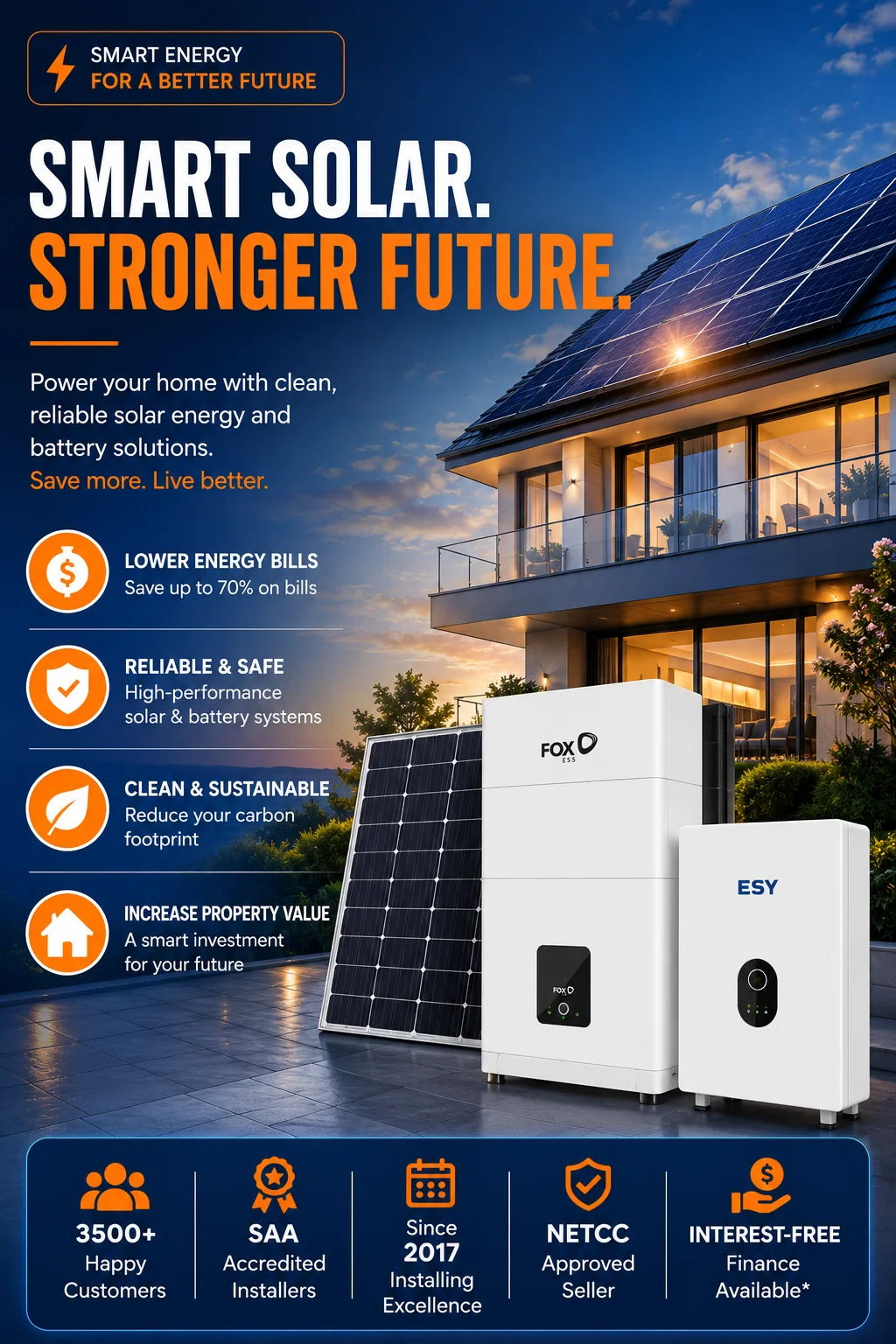
The CHBP is Australia's federal solar battery support program. It helps reduce the upfront cost of installing an eligible solar battery through the Small-scale Renewable Energy Scheme (SRES). Registered agents can provide an upfront discount when you assign your right to claim Small-scale Technology Certificates (STCs) to them. The program is available to eligible households and small businesses through to 2030.
From 1 May 2026, the STC factor is 6.8 STCs per usable kWh. The STC factor is applied at different rates depending on battery capacity, with the first 14 kWh receiving the full rate. Larger batteries receive reduced rates on capacity above 14 kWh. The STC factor is scheduled to step down through to 2030.
What Is the Cheaper Home Batteries Program?
The CHBP is a federal support scheme for solar battery storage, delivered through the same Small-scale Renewable Energy Scheme (SRES) mechanism that supports eligible small-scale renewable energy systems. Eligible batteries can create Small-scale Technology Certificates (STCs), which can be assigned to a registered agent in exchange for an upfront discount on the purchase price. You can also choose to buy and sell STCs yourself.
Solar batteries allow households to store solar energy for use when it is needed most, such as at night or during periods of peak demand. This can help reduce reliance on electricity from the grid, support grid stability and accelerate renewable energy uptake.
If you are considering adding a battery to an existing solar system, you can also explore Smart House Solar's solar battery solutions for available system options.
Key Facts
| Program detail | Information |
|---|---|
| Started | 1 July 2025 |
| Runs until | 2030 |
| Discount level | The STC factor is designed so the discount rate equates to around 30% of the upfront cost of installing solar batteries |
| Income test | No income test is specified for the federal program |
| Postcode restriction | The federal program is not restricted to particular postcodes |
| Application required | You can assign your right to claim STCs to a registered agent, who can provide an upfront discount on the purchase price |
| STC mechanism | Eligible solar battery systems can create STCs under the SRES |
What Changed on 1 May 2026?
Two important changes to the CHBP took effect from 1 May 2026.
Change 1: Faster Step-Downs
The STC factor now changes on a six-monthly schedule. For May to December 2026, the factor is 6.8 STCs per usable kWh. It then reduces to 5.7 for January to June 2027 and continues to step down every six months through to December 2030.
Change 2: Tiered Rebate by Battery Size
Instead of applying the full STC factor across all eligible battery capacity, the STC factor tapers according to usable capacity:
| Tier | Capacity band | STC factor applied |
|---|---|---|
| Tier 1 | 0 to 14 kWh inclusive | 100% |
| Tier 2 | Greater than 14 to 28 kWh inclusive | 60% |
| Tier 3 | Greater than 28 to 50 kWh inclusive | 15% |
In plain terms: a standard 10 kWh or 13.5 kWh battery sits entirely inside Tier 1. The reduced rates apply to capacity above 14 kWh. The lowest rate applies to capacity above 28 kWh and up to the 50 kWh usable STC claim limit.
The STC factor is designed to adjust over time in line with falling battery costs, with the discount rate intended to remain around 30% of the upfront installation cost.
How Much Is the Battery Rebate in 2026?
For installations from 1 May to 31 December 2026, the STC factor is 6.8 STCs per usable kWh. The actual dollar value of the support depends on the value of the STCs and how they are assigned or sold. The Clean Energy Regulator recommends using the REC Registry STC calculator to estimate the number of STCs a solar battery installation may be eligible for. For readers comparing larger systems, see our 13kW solar battery price guide, 15kW solar battery price guide and 20kW solar battery price guide.
Estimated Rebate by Battery Size
| Battery size | Approximate rebate |
|---|---|
| 14 kWh battery | $3,700 |
| 28 kWh battery | $5,900 |
| 42 kWh battery | $6,400 |
| 50 kWh battery | $6,700 |
These figures are estimates and the actual dollar discount can vary depending on the value of STCs and the arrangement with the retailer or registered agent.
Because STCs are calculated using the battery's usable capacity, always confirm the usable capacity of your specific battery before signing an installation agreement. The CER confirms that STCs can only be claimed for the first 50 kWh of usable capacity, even when the battery's nominal capacity is higher.
Two things trip people up on sizing:
- Eligibility is checked on nominal capacity, while STCs are calculated on usable capacity. A battery's nominal capacity is the maximum amount of energy it can store, while usable capacity represents the energy that can actually be discharged for use.
- STCs are only created for the first 50 kWh of usable capacity, regardless of how large the battery is.
The Full STC Step-Down Schedule (2026–2030)
The STC factor is scheduled to decline every six months through to the end of 2030. The Clean Energy Regulator currently lists the following factors:
| Period | STC factor |
|---|---|
| January to April 2026 | 8.4 |
| May to December 2026 | 6.8 |
| January to June 2027 | 5.7 |
| July to December 2027 | 5.2 |
| January to June 2028 | 4.6 |
| July to December 2028 | 4.1 |
| January to June 2029 | 3.6 |
| July to December 2029 | 3.1 |
| January to June 2030 | 2.6 |
| July to December 2030 | 2.1 |
Takeaway: the STC factor becomes progressively lower over the life of the program. The factor applicable to your installation depends on the relevant period and the eligible usable capacity of your battery. If you are comparing larger battery sizes, our 15kW solar battery price and 20kW solar battery price guides can help you explore system costs.
If you are comparing different battery sizes, Smart House Solar also provides information on solar battery systems and battery options for Australian homes and businesses.
Who Qualifies for the Battery Rebate?
Eligibility depends primarily on the battery, solar PV system and installation requirements.
| Requirement | Eligibility criteria |
|---|---|
| Capacity | 5 to 100 kWh nominal capacity, with STCs available only for the first 50 kWh of usable capacity |
| Condition | The battery must be new, created within 12 months of the installation date, and must not have previously been installed or claimed |
| Solar pairing | The battery must be installed with either a new or existing solar PV system of no more than 100 kW |
| Approved equipment | The battery must appear on the Clean Energy Council's approved battery list |
| Standards | The system must comply with Australian and New Zealand standards, including AS/NZS 5139:2019, and applicable state or territory electrical safety laws |
| Installer | The battery must be installed by a Solar Accreditation Australia (SAA) accredited installer with battery endorsement and in accordance with SAA technical requirements |
| VPP-capable | Grid-connected systems must be technically capable of participating in a Virtual Power Plant. Off-grid systems within 1 km of the grid have specific VPP requirements |
| One battery per premises | Only one solar battery system is eligible for STCs per premises. For grid-connected systems, this is one battery per NMI or commercial sub-meter |
Does It Work With an Existing Solar System?
Yes. You do not need to replace your solar panels to add a battery. The existing solar PV system must comply with state and territory electrical safety regulations, but it does not need to be on the CEC's approved product list.
The inverter the battery is connected to must be capable of participating in a Virtual Power Plant. Other inverters on the property, such as existing solar PV inverters, do not need to be VPP-capable. If the battery is connected to an existing VPP-capable hybrid inverter, specific CEC listing requirements apply.
If you are upgrading an existing system, Smart House Solar can help you assess your options through its solar and battery solutions.
How the Rebate Is Calculated (Step by Step)
- Confirm your battery's usable capacity in kWh from the manufacturer's specifications. For smaller systems, you can also review our 6kW solar battery cost guide.
- Apply the applicable STC factor to the usable capacity, with 100% applied up to 14 kWh, 60% applied to capacity above 14 kWh and up to 28 kWh, and 15% applied to capacity above 28 kWh and up to 50 kWh.
- Calculate the number of STCs available and determine their current value. The CER provides a REC Registry STC calculator for estimating eligibility.
- If you assign your right to claim STCs to a registered agent, the agent may provide an upfront discount on the purchase price of your system.
State-by-State: Can You Stack Extra Incentives?
The federal CHBP applies across Australia. Some states and territories may also have additional battery programs.
However, the Clean Energy Regulator advises that you should check whether the state or territory program can be claimed alongside STCs, because some programs may not be eligible if you are claiming STCs under the SRES.
New South Wales (Sydney & Regional)
NSW may have separate battery and VPP incentives depending on the current state program and eligibility requirements. Check the current NSW program terms before assuming an additional incentive can be combined with the federal STC support.
Victoria (Melbourne)
Victorian households can access the federal CHBP where the battery installation meets the federal eligibility requirements. Any separate Victorian incentives should be checked against their current eligibility and interaction rules before applying.
Western Australia (Perth & Regional)
Western Australia may provide additional battery support through state programs. If you are considering combining a WA incentive with the federal STC support, check the current WA program requirements because state programs may have their own eligibility conditions.
Queensland (Brisbane)
Queensland households and businesses can access the federal CHBP where the battery installation meets the federal eligibility requirements. Check current Queensland programs separately if you are considering additional state support.
South Australia (Adelaide)
South Australian households can access the federal CHBP where their battery installation meets the program requirements. Any additional state support should be checked for current eligibility and whether it can be combined with STCs.
ACT, Tasmania, Northern Territory
State and territory battery programs can change over time. Check the current government requirements for your jurisdiction before assuming an additional incentive can be claimed alongside the federal STC support.
Frequently Asked Questions
Is the solar battery rebate still available in 2026?
Yes. The Cheaper Home Batteries Program continues through to 2030. The STC factor changes over time, with the 2026 May to December factor set at 6.8 STCs per usable kWh.
How much is the battery rebate worth right now?
For May to December 2026, the STC factor is 6.8 STCs per usable kWh, with the factor tapering for battery capacity above 14 kWh. The actual dollar value depends on the value of the STCs and the arrangement with your retailer or registered agent.
Can I get the rebate if I already have solar panels?
Yes. A battery can be installed with an existing solar PV system. The existing solar PV system must comply with applicable state and territory electrical safety regulations. It does not need to be on the CEC approved product list.
Do I have to join a Virtual Power Plant to get the rebate?
No. The federal requirement is that the relevant system is technically capable of participating in a VPP. Actual VPP participation is not required to claim the federal STCs.
Does battery size affect how much rebate I get?
Yes. The STC factor is applied at 100% up to 14 kWh, 60% to capacity above 14 kWh and up to 28 kWh, and 15% to capacity above 28 kWh and up to 50 kWh.
Will the rebate keep shrinking?
The STC factor is scheduled to step down every six months through to December 2030. The current CER schedule moves from 6.8 in May to December 2026 to 5.7 in January to June 2027 and eventually 2.1 in July to December 2030.
Is there an income test for the federal rebate?
The federal CHBP eligibility requirements published by the Clean Energy Regulator focus on the battery, solar PV system, installation and technical requirements rather than an income threshold. State or territory programs may have separate eligibility conditions.
Find Out Exactly What Your Battery Is Worth
These numbers can vary depending on your battery's usable capacity, the applicable STC factor and the current value of STCs. Smart House Solar works exclusively with CEC-approved batteries and SAA-accredited installers, and can run the exact calculation for your home or business before you commit to anything.
Prefer to talk it through? Call 1300 650 747. There's no cost and no obligation to find out what you qualify for.


 Call Now
 Whatsapp
 Download Packages